
Inverness Airport Chauffeur: Stress-Free Private Transfer
Travelling is exciting at the same time stressful if your driver is not well trained and professional. But in the whole exciting journey flight delays, luggage hassle, and the stress of finding a taxi while directly landing on the airport can sucks all your energy before your trip begins.Right after landing at Inverness Airport which is the ultimate Scotland’s gate way to highlands you have already chosen a destination which is full of breathtaking landscapes, scenic beauty, rich culture, and all this comprising and making an unforgettable experience. The only thing which is going to make it all is just to arrive calmly and peacefully. This is the point where chauffeur services come aligned with transforming your aerial at Inverness Airport into a seamless stress free journey. In this blog post you will explore everything you need to know about why booking a private chauffeur is far more important and it is not just a luxury but a smart choice, ensuring peace, comfort, punctuality starting from touchdown to the destination. Why Inverness Airport Is A Popular Travel Hub: Before diving into why privately hiring a chauffeur surface is obligatory let us firstly understand Inverness Airport and importance of its location, why it is a popular travelling hub. Inverness Airport is located just 8 miles approximately northeast of the Inverness City centre making it primary entry point for visitors exploring Loch Ness, the highlands, whisky trail, isle of sky and beyond. The airport is serving flights from major cities including London, Manchester, Belfast and many more making it a vital connection between Scotland and the World. For holiday marks, the excitement of arriving to enjoy the scenic beauty of the landscape can all quickly fade right after landing at the airport totally filled with stress.This is the whole focal point which can redefine your experience with hiring the chauffeur. Understand What a Private Chauffeur Service at Inverness Airport A true chauffeur is not just the taxi driver, who not just simply drives but elevates your experience making it more memorable and nostalgic. The following will explain what you actually get when you book the private chauffeur at Inverness Airport. Flight Mornings For Stress Free Pick Ups: Hiring a private Chauffeur results in stress free flight pick ups. Private Chauffeur tracks your flight in real time, so if your plane lands early or if it’s late or time changes with the weather changes, the driver is already informed. You will never wait around a busy pick up zone or miss your transfer because of timing issues. Help with Luggage: When travelling , obviously there is a lot of luggage, travelling with multiple bags is not an easy task.The Chauffeur handles your luggage so it may help in saving time and effort. Meet and Greet Service: The chauffeur is a professional trained individual that meets you inside the arrival area, holding a sign with your name , so it leaves you easy with no guessing where to go after the baggage claims. This personal welcome sets the tone for the entire comfortable trip. Private and Direct Transfer: When hired the Chauffeur service takes you directly from Inverness airport to your desired destination without any hurdles faced by the private transport or shuttles. Reasons Why Travellers Prefer Private Chauffeur Arrivals: The following reasons explain why most international travellers, high net worth clients prefer chauffeur services. Zero Wait time at Arrival: Airport taxis and buses often have queues especially during the peak travelling seasons . With hiring the Chauffeur your ride is waiting for you as you step out. That is the reason most international clients prefer chauffeur services. Ideal for Family and Clients: If you are travelling with family, kids or groups hiring a private chauffeur means; This convenience beats the hassle of booking multiple taxis or fitting into busy buses. Reliable effective Time Management: When Hiring the Chauffeur, it clearly refers that your time is effectively managed and you need not to worry about your time. Private Chauffeur arrives early anticipating traffic, weather and airport conditions. If you are a business man with a heavy workload of meetings, hotel check ins or train reservations, punctuality matters the most. Local Travel Expertise: Drivers based in Inverness are not just drivers, they are also the local guides, offering the guidelines to the new passengers. They are totally aware of ; This means that your private transfer can also feel like the beginning of your Scottish adventure. Inverness Airport To Popular Destinations Travellers are always looking for the seamless experience when hiring the chauffeur, the experience is undoubtedly provided. International clients are always looking for the travelling distance from Inverness Airport to their desired destinations. Destination Distance from Inverness Airport Typical Transfer Time Inverness City Centre ~13 km ~20–25 min Loch Ness & Urquhart Castle ~35–40 km ~45–60 min Culloden Battlefield ~25 km ~35–40 min Fort Augustus ~80–90 km ~1 hr 30 min – 2 hrs Isle of Skye (Portree) ~200 km ~3 hrs Whether you are going to travel to the Scottish Highlands or going out for dinner, your hired chauffeur will ensure a smooth and seamless experience. Inverness Airport Arrivals Made Simple: Step by Step Process The following will explain how hiring the Private chauffeuring hiring works. Book In Advance Booking in advance saves you from rush and anxiety. Reserve online at least 24-48 hours before your landing. You will receive the confirmation with pick up details. Provide Fight Details In order to travel without any hindrance it is important to provide full fledged flight information, your flight number, arrival time and let the chauffeur monitor delays. Comfortable Ride to your Destination Your hired ride is almost most comfortable and provides the seamless travelling experience throughout your stay at Inverness or Scottish Highlands. Relax in a clean and climate control vehicle. Your driver knows the best routes and can take the scenic alternatives if you request them. Who Benefits most From the Chauffeur Services: The following travellers take up the biggest advantage when hiring the
5 Reasons to Hire A Chauffeur for Your Loch Ness Tour and Skip the Crowd
There are different people around the world encompassing a lot of hobbies that they pursue in their leisure time. Travelling is often heard as the utmost therapy from the tourists, the people who are fond of travelling to new places and getting a lot of new exposure. When travellers plan a journey to Scottish Highlands, one place which is at the top list is Loch Ness. Stretching across 23 miles and reaching more than 230 meters. Loch Ness is not only famous for its legendary resident that is called Loch Ness Monster but it also carries the scenic beauties of dramatic landscape, medieval ruins and scenic driving routes. However, with over half a million annually the Loch and the surrounding spaces quickly become crowded especially during the peak travelling seasons between May and September. Long Parking queues, limited transportation and tour bus congestion can turn what should be a magical Highland experience into a logistical headache. If you are desiring to explore Loch Ness in comfort, privacy and efficiency , hiring a professional Chauffeur is not just necessary or luxury but it is one of the strategic and smart choices because Chauffeur makes the journey more memorable. Below, we will explore the Top Five reasons how hiring a chauffeur makes your experience inevitable. And you enjoy your travelling journey without encountering the tiring coward. 5 Reasons That Will Make Your Loch Ness Tour Experience Worth It The following explore the significant reasons that significantly elevates your Loch Ness experience. 1. Intelligent Route Planning To Avoid Peak Traffic One of the foremost challenges that tourists face during their journey in the Scottish highlands is the peak traffic routes along A82 which is the main road that runs alongside the Loch. This route encompasses beautiful scenery and due to the scenic nature this route is heavily used by the tour buses and rental vehicles.Hiring a professional Chauffeur for making the remarkable journey more nostalgic is a strategic choice. A Chaffeur mostly rely on; To illustrate this from the example that if you are travelling in the morning to visit one of the finest places in the Loch Ness which is Urquhart Castle allow it to have ruins and panoramic views before the bus tourist arrives. Likewise, scheduling a stop at the Fort Augustus outside the peak cruise docking time ensures scenic exposure while also minimizing a quieter canal side experience. Unlike the fixed rental cars drivers, Chauffeurs elevate your travel experience by ensuring the timely dynamics. This flexibility and feasibility allows you to maximize scenic exposure while also minimizing the waiting time which is something public tours cannot offer at any cost. 2. Stress Free Highlands Driving and Door To Door Luxury: Travelling is therapeutic for the travelling lovers but it can become the most stressful when you are not with the professional driver. Hiring a chauffeur for your remarkable journey is utmost strategic. Driving through the highlands is undoubtedly beautiful but at the same time challenging for the visitors unfamiliar to the locations. They can encounter with; These all are reduced by hiring a Chauffeur and eliminating the stress free journey. Whether you are travelling from Inverness, arriving via Inverness Airport or you are starting your journey from Edinburgh, your journey becomes more comfortable and seamless. While choosing Chauffeur for making your journey more memorable, you are unlocking to many of new facilities because Modern Chauffeur typically includes luxury saloons and that are equipped with; Research explaining the Travelling Psychology shows that stress free transportation significantly enhances the overall travel satisfaction. Instead of concentrating on navigation and parking logistics, with choosing Chauffeur as your journey partner you can truly immerse yourself in the Highland Landscape. 3. Exclusive Access to the Hidden Gems Beyond The Standard Route Most groups’ tours focus on some limited circuits such as Urquhart Castle, a short cruise and perhaps a brief and short stop in Fort Augustus. However, Loch Ness and its surrounding Highlands offer a far more depth than mainstream tour guides suggest. Private Chauffeur is your own chosen partner which can easily elevate your travelling experience just as you land at the Inverness airport. With a private Chauffeur you can explore; These locations are mostly missed by the large couches because of limited parking spaces and tight schedules. And the ultimate result is the more authentic and stress free travelling Highland experience. Luxury travellers research shows that tourists value personalization over mass tourism. A chauffeur driven Loch Ness tour offers tailored pacing it means that you can easily stop for photography of the scenic beauty, romantic sunset views or family friends flexibility. 4. Enhanced Safety and Local Insights The highlands serve as the most beautiful scenic views, but they require expert and experienced driving. The A82 road near Loch Ness may experience; Professional Chauffeur undergoes a professionalized set of training sessions and are made ready to encounter such types of hurdles. They seemingly monitor the weather updates and adjust thor schedule accordingly. Beyond the elevated exposure Chauffur provides, they also encompass a deep local knowledge. As you are travelling with the professional Chauffeur, you may learn; The above mentioned points can elevate your journey into an educational or the cultural experience not merely just transportation or the journey of peace and solace. 5. Time Efficiency: Maximize Every Hour in the Highlands Maintaining the time is the utmost important skill that the Chauffeur has. Using less time in travelling and more time in exposure and exploring the scenic beauty of Loch Ness is another significant benefit of hiring the Chauffur. Professional Chauffeurs are well trained in using the time effectively. And it is seen that the hidden cost of the crowded travel is lost time. Waiting for buses, searching for the parking or queuing for entry tickets can easily consume the hours. A professional chauffeur optimize time through; For example, if you are planning a cruise on Loch Ness, professional Chauffeur can align with the departure times ensuring that no other connection is missed. Furthermore;
Amenities Inside a Chauffeur-Driven Luxury Car
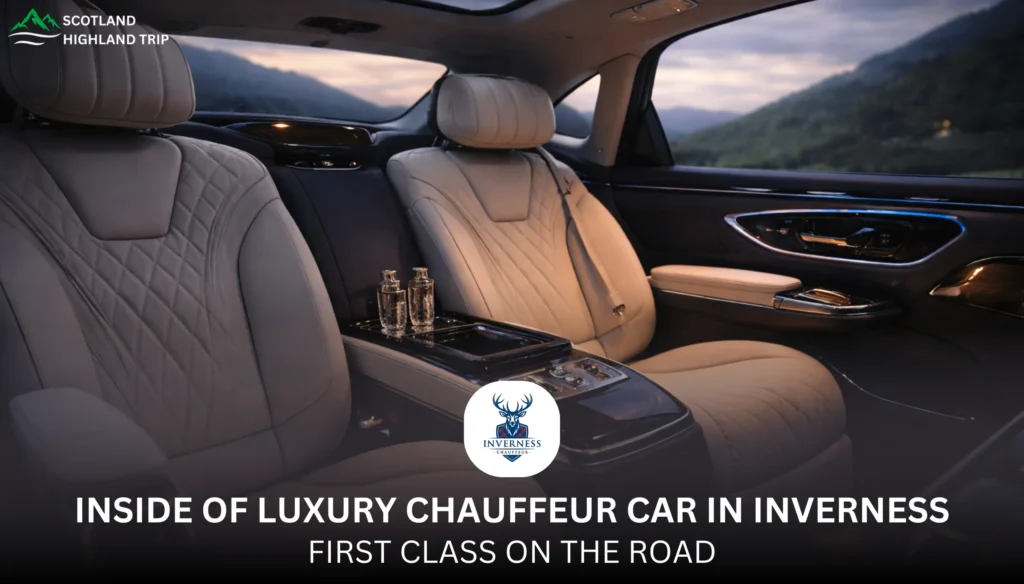
For High net worth Clients, the journey is much more crucial than the destination because the destination is chosen by them but the journey, the peace and its quality mostly depends on the organizing company and the institutions who are providing the luxury travels. Selecting a Chauffeur Driven car is not merely choosing a transportation, but it is thoroughly unlocking peace, solace privacy, comfort and sophistication. From airport transfer to corporate travel, wedding and VIP roadshows, chauffeur services in Inverness redefine what it means to travel in style. The guide will explore what’s Inside a Chauffeur driven car, what are the amenities provided while choosing the chauffeur service, This is not the service but it is the functional elegance designed around the passenger. But the question arises, what truly sets chauffeur drivers apart from choosing other transportation. Choosing Chauffeur service is not just choosing the brand, but it is choosing carefully curated amenities inside the vehicles that elevate every journey as the first class experience. The Philosophy behind the Chauffeur – Driven Car: Before understanding what’s inside the chauffeur driven car, it is necessary to understand the mindset, the thorough perspective inside a chauffeur driven car. Unlike the self driving luxury cars, chauffeur vehicles are passenger driven and highly centered around passengers. Every feature is selected to enhance; The car thus becomes the extension of premium lifestyle, mirroring the standards of first class airline cabins and five star hotels. What you Will Get with Choosing a Chauffeur Driven Car The following will explore what amenities will be provided if you choose the chauffeur driven car for your nostalgic and memorable journey. Executive Seating: Comfort Engineered to Perfection The foundation of any first class vehicle is the comfortable and executive seating. Chauffeur driven vehicles are designed with premium leather seats, often handcrafted and seemingly designed to support the body posture during the long extended travel. Advanced seta typically include the following; These are not just the luxury add ons but the fatigue reduction tools that are caused by enormous travel. Climate Controlled Zones: Personalized Comfort Luxury travel undoubtedly means never ever compromising on comfort.Mostly chauffeur driven cars are designed with dual or quad zones climate control, allowing passengers to set their own temperature regardless of the depending on driver, This undoubtedly leads to; Some high end vehicles also include air purification systems, humidity control especially designed for the travellers having sensitivity with the air quality. Privacy Features: Confidential and quiet space Privacy is one of the important concerns of international clients. No matter what it is, high net worth passengers tremendously care about their confidentiality and private space. Privacy is the defining feature of the chauffeur driven cars. Chauffeur vehicles are designed with; This creates a cozy environment where outside noise fades, allowing passengers to relax and work seemingly in a quiet place.Furthermore, there is another premium feature that is included in executive and VIP vehicles, a retractable partition that separates the driver from passenger cabin, offering complete privacy which is ideal for high sensitive business discussions. Travelling with being Disconnected In today’s fast paced world staying updated and getting connected is important. And luxury is defined by staying connected without effort. A chauffeur driven car functions as a mobile office. Several Amenities includes; The provided resources allows passengers to; Unlike local, normal, private ride hiring transports, connectivity in chauffeur services is almost uninterrupted and reliable. Advanced Entertainment System: Chauffeuring service is redefined by the clients peace and their comfort. Meeting clients’ expectations is the foremost important point for the chauffeuring services. Entertainment in the chauffeuring service is redefined not distracting. Premium vehicles offers; Passengers can easily tackle their boring travelling by watching films, listening to music without disturbing others. Luggage Space And Practical Elegance A first class journey is not only defined by encapsulating advanced features which are absent in normal transportation but the luxury chauffeur driven car journey is tested on its applications. Chauffeur vehicles are designed and selected for their ability to; Boot space is optimized and chauffeurs are careful for loading and unloading, something that is rarely guaranteed in normal transportation. Safety and Technology; Something that is defined by Peace of Mind True luxury lies in feeling secure without noticing the efforts.Chauffeur driven cars are equipped with; These services ensure the Chauffu’s expertise, ensuring smooth, safe and confident ride. The Chauffeur’s Role In Enhancing the Amenities The chauffeur is the professional driver that makes the journey more memorable and nostalgic. Just providing the amenities, or transforming the vehicles that values peace and comfort of passengers does not just create the first class experience but it is the Chauffur, the man sitting behind the wheels that activates them. Professional Chauffeurs; Chauffeurs are provided training to respond this way, ensuring that the passengers journey feels effortless and redefined. Who Benefits Most from Chauffeur Driven Amenities Chauffeur driven cars are ideal for; For the high net worth passenger, amenities are not the extra indulgence but these ar necessities. FAQS Final Thought: Stepping inside a chauffeur-driven car is stepping into a world where every detail is intentional. The amenities are not there to impress,they are there to serve, comfort, and elevate the passenger experience. In an age where convenience is common, true luxury lies in thoughtful execution. Chauffeur-driven cars deliver this through meticulously designed interiors, advanced technology, personalised service, and an unwavering focus on the passenger. It is not just transportation. It is a first-class journey on the road. Sarah SmithAn experienced chauffeur who enjoys exploring the beautiful landscapes of Inverness and writing about her experiences. Passion for driving and storytelling, desire to excel in her career and personal interests.
Wedding Car Hire In Scotland: What To Know Before You Book.
Destination Wedding is the utmost dream of the high class people. Mostly people plan thor wedding in the place that is most prestigious and nostalgic to them in order to make their remembering day more beautiful. Planning a wedding in Scotland comes with the idea of unique romance, tradition and breathtaking scenery. Whether your celebration of the most important occasion takes place at the historical side of highlands or countryside estate near Inverness, one element that plays a crucial role in making up the event more nostalgic and memorable is the luxurious transport. Transportation is one of the most important elements that can take up the event into a smooth flow. Choosing a luxurious car is one of the smart choices that one can make for their wedding event. Wedding transport is not just a transport taking the guest from one location to another but it affects your whole timetable, comfort, photography, guest experience and overall atmosphere of the event. The guide breaks down exploring everything that couples need to know before wedding car hire in Scotland with wholly practical insights tailored to Scottish Conditions and local logistics. Understanding Why Wedding Car Hire Is Extremely Important In Scotland: Before diving into the thing couples need to know before they hire a wedding car in Scotland. It is utmost obligatory to understand why hiring a car in Scotland is significantly important. Scotland’s geography makes the professional car more curious if you are planning to book for your important day. Long Distance and Rural Areas: Many Scottish Wedding venues are located in rural or semi remote areas particularly in the region surrounding Inverness and Highlands. Narrow roads, limited signage can make self driving more stressful on the wedding day. Hiring a professional Chauffeur car can significantly reduce the self driving stress and ensures punctuality and professionalism without adding the pressure. Photographic Value: Photography is one of the most important elements in the entire wedding event. Wedding cars offer features prominently in wedding photos. A classic or luxurious vehicle enhances the visual storytelling, especially when paired with scota;lnd’s historic architecture and cultural history. Unpredictable Weather Conditions: Scottish highlands are marked by the insignificant weather conditions. Scottish weather can change significantly. Rain, wind, and cold temperatures are the most common in summer months. A well maintained hired Chauffeur vehicle provides utmost comfort even in the dark weather conditions, particularly for the bride attire and the wedding photography schedules. Types of Wedding Cars Available in Scotland: Wedding cars are of many types. Choosing the right wedding car depends on the wedding style, number of guests and the logistical needs. Scotland offers a wide range of options. Some of theme includes; Classic and Vintage Wedding Cars: Classic and vintage wedding cars hold significant importance in the modern world. These are among the popular choices for traditional Scottish Weddings. Vintage Rolls-Royce, Bentely and Classic Jaguar models offer a wide range of timeless elegance and are paired beautifully with historic events and formal ceremonies. These cars are best suited for; Modern Luxury Vehicles: Modern Chauffeur driven cars are made meeting the demands of the modern chaotic world. Modern vehicles such as Mercedes, Range Rover Vogue provide understated luxury, smooth ride and climate control. And is the ideal choice for the people undergoing the journey within Scotland or Inverness Based Venues.Modern Luxury Vehicles are the best for; Limousines and Larger Vehicles: For bridal parties or immediate family transport, limousines and executive carriers are the best options. These vehicles ensure group coordination and reduce the number of vehicles that are required to transfer large numbers of gusset from one place to another. Guest Transport Options: Minibuses or the executive coaches are extremely common especially when venues are located outside town centres. Guest transport option is particularly helpful in rural Scotland where parking availability is quite limited. Understanding When Should You Book Wedding Car Hire In Scotland: Making yourself aware about the timing condition before hiring a car in Scotland is utmost obligatory. Timing is very much crucial. Peak Wedding Season: Peak Wedding Season refers to the tim when wedding events are occurring almost everyday. The Scottish wedding season typically runs from late spring through early autumn. During the crucial period premium and prestigious vehicles and Chauffeur drive cars are very much in demand. The most recommended time to hire a luxurious car for your wedding is; Early bookings are extremely important in areas around Inverness and the Highlands, where availability is much more limited due travel distance and smaller fleets. Understanding Wedding Cars Hire Cost: Pricing comes along with the way when you are booking an expensive car to make your day more nostalgic and memorable. Wedding car pricing in Scotland varies depending on the several key factors. Vehicle Type: Vintage and highly luxurious cars demand higher rates due to maintenance and exclusivity. Modern luxury cars offer competitive pricing with enhanced liability. Time Factors/Hiring Duration: Cost also depends on the hire duration, the actual time duration you are hiring the Chauffur driven car. Cost mostly varies on the services covered such as; Seasonal Demand: If you are booking the Chauffur driven car in the Peak Wedding seasons , the hire costs more than winter or the weekdays weddings. Additional Services: The hiring cost mostly demands the extra, additional features the couples include in their luxurious bookings. The extra services includes; The cost mostly demands on the mentioned factors. Always request a clear and itemised quote in order to avoid unexpected changes at the end time. What Should a Wedding Car Hire Package Includes: Before confirming your wedding booking, it is necessary to get informed about what services are included in the package. The Following services are included in the Chauffeur driven car if you choose it for your dream wedding destination. Professional Chauffeur: None other than a professional chauffeur is there to drive the luxurious car and make your wedding memorable. A well experienced chauffeur is familiar with the Scottish rao conditions. This role extends beyond driving and helps
Concierge On Wheels: Extra Services A Modern Chauffeur Can Provide
In 2026, luxurious travel is no longer accompanied by the local drivers. High net worth passengers and international clients value journey over destination, thus the ultimate need is preferring peace and comfort in the whole process which is only provided by the modern Chauffeurs. Chauffeur is no longer just a driver, chauffeur provides a redefined, high personalized service experience often described as Concierge on wheels. For the clients aiming to use the chauffeuring service in the areas of Inverness and Scottish highlands, the evolution is extremely important for those who are always tired of long distance, tight schedules, variable weathers. The international clients demand more than just basic transport. They are in need of expert coordination, local operational knowledge and safe and protective support throughout the journey. The following blog will explore extra services a modern chauffeur can provide, focusing on how modern chauffeuring companies operating across Inverness and Scottish highlands deliver values that go beyond getting from one place to another. The Modern Concierge Chauffeur; More than just a driver: Chauffeur is the ultimate important person in the luxurious journey because he is the one providing comfort and solace and operating at the service. Traditional Chauffeur services merely focus on presentation, punctuality and comfort but the Modern Chauffeur elevated these services. Though these services remain essential, focusing on them merely and ignoring the modern liner’s demands is not the job of the expert Chauffeur. A contemporary Chauffeur operating within Inverness and Scottish highlands act as; This is where the ultimate concept of Concierge on Wheels applies , focusing on client,support and peace throughout the remembering and nostalgic travel experience. Expert Services A Modern Chauffeur Can Offer: Modern Chauffeur can work best in many ways. Following are expert services which are the first and foremost job of the modern chauffeur operating in Inverness. Smart and Intelligent Journey Planner Across the Service Areas: A modern chauffeur does not solely rely on navigation apps. When offering services throughout the Inverness routes, professional and strategic planning becomes of the ultimate importance. The service offers a wide range of benefits . These includes; Airports and Long Distance Travelling Coordination The modern Chauffeuring services include coordination not just providing the support and pace throughout the long and tiring journey. Communication is necessary and expert coordination between the passengers and the chauffeurs is the ultimate need in the fast paced and chaotic world. The Modern Chauffeur services in Inverness now include the strategic and effective time and transfer management not just driving. The extra support that Chauufeurs provide includes; The expert services beyond adjust sitting behind the wheel and offering comfort in the journey of the clients, modern chauffeur elevates the experience of the clients, offering the mentioned services which are significantly beneficial for the following; Realistic Concierge Assistance During Travel: The defining feature that separates the modern chauffeur from the traditional one is the ultimate tremendous support during the journey. A chauffeur operating as the concierge on wheels can; Instead of just reacting to the problems and making the one’s feel aggressive which is usually done by the local taxi drivers, Modern Chauffeurs anticipate and respond without making the situation worse and manage everything discreetly. This is what Concierge on wheels looks like. Comfort Management in the Long Tiring Journey: International clients wanting to travel in the Scottish Highlands or the high net worth passenger seeking the Chauffeuring service in Inverness are in the ultimate need of comfort for their long and tiring journey. Providing and managing comfort should be the first and foremost priority of the chauffeur providing service. Journey encompassing Inverness and Highlands service areas often involves longer drive times. A modern Chauffeur ensures comfort throughout the long term experience. The services includes; This is particularly evident and significant for; Ensuring Comfort for those who value comfort is the ultimate job of the chauffeur and this is what mostly people hire the Chauffeur services. Event, Corporate and Wedding Travel Coordination: Chauffeuring services are well known for supporting and managing events, mostly people trust the chauffeuring sources for managing their utmost important occasions of their lives such as weddings. In its most important factors, Chauffeuring services frequently support events taking place from one location to another instead of one single location. Extra services the chauffeur can provide for your events taking place in Inverness includes; In these situations modern chauffeur need becomes more important and choosing chauffeur service is the just the need but it is the most smart and strategic choice as it becomes the logistical backbone of the whole event. Local Operational Knowledge. Not just Tour Guiding: Expert Chauffeurs like us in Inverness are not just tour guides but also they have the local operational knowledge. Operating Regularly through the areas of Inverness helps them to gain the knowledge about each and every part of the location. This includes; This insight helps the journey to run smoothly, especially for the clients who are totally unaware of the regions. Weather Awareness and Professional Driving Standards: The Scotland Highlands are extremely well known for changing weather conditions and road rural conditions. A modern Chauffeur trained far beyond the standardized professional driving. Modern Chauffeurs undergo seamless training in order to fully meet the standards and expectations of the clients. Professional includes; Including the given mentioned services, these expertise replaces uncertainty with confidence. Seamless, Stress Free Travel Experience: Modern Chauffeurs extra services deliver one core benefit which is peace of mind. Every high net worth clients values peace of mind and safety across their travelling journey.A modern Chauffeur service operating across Inverness ensures; Navigating the above mentioned inclusion, speaks to the essence of concierge level chauffeur service. FAQS Final Thought A modern chauffeur is no longer defined by the vehicle alone. The true value lies in expert planning, discretion, adaptability, and human judgement. For clients using chauffeur services across Inverness and the Scottish Highlands, the concept of Concierge on Wheels represents a higher standard of travel, one where every detail is managed with care and
How A Professional Chauffeur Enhances Your Wedding Day Experience.
Wedding day is one of the most important days in one’s life. Wedding day is not just a normal event but it is ultimately tied with emotions, feelings and once in a lifetime events. Everything whether it is small or large matters a lot and has a great impact in one’s life. Every important detail matters, venue decor, food, dresses, comfort and presentation. The above mentioned things matter a lot and are significantly important but one thing which is ultimately crucial but often overlooked in wedding transportation. Chauffeur in inverness is the most important event because wedding transportation matters a lot. A Professional Chauffeur service in Inverness and Scotland does more than simply transferring bride and groom from one location to another. It further underscores peace and solace, elegance, presentation and luxury touch in the entire wedding experience. In the modern and fast paced world when everything is turning from head to toe, weddings are also elevated and becoming more personalised and experience driven so choosing chauffeur is not the need but it is the strategic choice. The following guide will explore how choosing chauffeur enhances and redefines your wedding day experience.from stress free logistics to refined presentations emotional comfort and unforgettable nostalgic experience. Understanding Why Wedding Transportation Deserves Much More of Attention: Before diving into the topic of why choosing Chauffeur service in Inverness is a more strategic choice to enhance your wedding experience. It is ultimately necessary to understand why transportation is gaining much more attention on the most memorable day in one’s lives. Wedding Operates at strict schedules, timing , comfort are utmost obligatory and delays, discomfort and confusion can only creates disturbance not only in the couple’s lives but also disrupts the whole entire ceremony. Just like normal travels, wedding transportation requires; A Professional Chauffeur is trained specifically for high pressure, high expectations. How Chauffeur Services Enhances Your Wedding Day Experience: The following will explain how the professional chauffeur service enhances and redefines your wedding day experience. Creating the Impression: First Impression is the last impression. This is often quoted and suits well when talking about professional services. Your arrival sets the whole tone. A Professional Chauffur in Invernessoffer luxury vehicle whether it is Mercedes, Bentely, or luxury SUV creates the whole statement of elegance and sophistication. Guests immediately recognise the importance of moments. How Chauffeur Elevates Your Experience; For the bride, stepping out of a luxury car driven by a professional and uniformed chauffeur creates a cinematic, unforgettable experience. Stress Free Timing and Effortless Coordination: Wedding days are undoubtedly busy and emotional. The last thing which is to worry about is the long traffic bars which ultimately cause hindrance in the smoothly flowing event. Professional Chauffeurs; This ensures that every delay, every transition moves smoothly.Whether it is; Full events become organized and flawless. Professional Étiquettes: A Chauffeur is not just the driver but they are trained in hospitality and comfort. They are totally in understanding; From handling bride’s long gowns and transferring them to different locations to supporting elderly family members, a professional Chauffeur adds a more layer of grace and respect that friend or ride sharing drivers simply cannot provide. Reliability, trusting Chauffeur Services For Your Big Day: Reliability is the key important element. Unlike informal transport drivers , professional chauffeur services operates with The reliability of the chauffeuring service eliminates the risk of \; When wedding matters are at stake trust and reliability matters more than cost saving. Choosing the right institution is ultimately necessary. Coordinated Transport For Family and VIP Guests: The high net worth people, while planning their wedding and booking the transportation, also arrange chauffeur transport for; This kind gesture shows respect, hospitality and care while also ensuring that everyone arrives timely and comfortably.Professional Chauffeur services can manage and arrange multiple vehicles, creating a well organized cohesive transportation plan for the entire wedding function. Customization with Wedding Themes: Professional chauffeur services offer Whether the wedding theme is classic, royal, minimalist or modern the transport experience can be tailored to align perfectly with your broader vision , to make the wedding event more appealing and impressive. Perfect For Wedding Photography and Cinematic videography: Wedding day is one of the biggest days as life is getting to be updated. To make it more memorable and remarkable, couples often book professional photographers and videographers for wedding photography because wedding photos last forever. And in the meantime the highly organized and professional transport service plays an important and crucial role. Luxury transport enhances and further redefines Chauufur Services ensures; With the help of Chauffeur services the result is timeless, magazine worthy visuals. Enhancing the Overall Guest Experience: Through the booking of luxury chauffeur services and with the smooth flowing of transportation; FAQS Final Thoughts: A professional chauffeur does more than drive you on your wedding day, they elevate the entire experience. From elegant arrivals and seamless timing to emotional comfort and unforgettable memories, chauffeur services bring refinement, reliability, and luxury to one of life’s most important milestones.In a world where weddings are becoming increasingly experience-focused, investing in a professional chauffeur is not about extravagance, it is about peace of mind, elegance, and excellence. If you want your wedding day to feel effortless, polished, and truly special, a professional chauffeur is not optional, it is essential. Sarah SmithAn experienced chauffeur who enjoys exploring the beautiful landscapes of Inverness and writing about her experiences. Passion for driving and storytelling, desire to excel in her career and personal interests.
The Rise Of Electric Luxury In Chauffeur Service (2026 trend)
The travelling industry is undergoing a decisive shift. Throughout the globe the people who seek travelling as the kind of therapy seek comfort and solace throughout their travelling journey. Because every person is much more inclined towards their hobbies and are at the verge of pursuing their hobbies. Travelling itself is a remarkable hobby, those who are deeply inclined towards pursuing their adventurous hobby are also in favor of comfort throughout their remarkable journey. To make the journey more memorable , travel industry which are heavily inclined towards using V8 engines transport, traditional fuel dominance are now being reshaped by the new force and incalcating the new force called Luxury Chauffeur with Electric Vehicles to make the memorable journey more convenient and hazard free. As we step into the latest technological year, Electric luxury cars are not just the new significant markers but they are set as the new golden standards. Journey is not just remembered for the travel and the place but also through its convenience and solace which can undoubtedly be provided by luxurious transport. The deep shift is not only concerned by the environmental factors as the fuel dominance cars are ultimately leading to the polluting environment but it reflects deeper changes in client expectations, operating economics, brand positioning and technological advances. In the following guide, we will explore why electric luxury cars are rising in the chauffeur services, how they are reshaping the industry, and what this suggests for luxurious travel in 2026 and beyond. Understand Why Chauffeur Industry is Deeply Inclined towards Electric Cars Why the Chauffeur services are moving towards Electric Cars services. The question is deeply relevant in today’s era. The focal point is that Electric services existed for years but their involvement in the chauffeur industry is deeply phenomenal. The simple answer is that luxury Electric vehicles have matured. With the increase in technology, Electric Vehicles have also gone through a decisive shift. Earlier models lacked range, refinement and prestige. These three are non-negotiable for chauffeur services.. Todays luxurious cars such as BMW , Mercedes Benz EQS, Lucid Air undoubtedly delivers, The Chauffeuring Industry is not only adopting Electric Vehicles because they are trendy but because the safety and peace of the passenger is first and foremost responsibility of the brand and the chauffeuring industry does not comprise these factors. The second important reason for adopting them is the now superior traditional luxury vehicle in key metrics. Why Client Expects Electric Vechicle The most important concern of the travelling agency is the client’s safety and their peace.The ultimate need is thoroughly focused on what clients are expecting. Client’s expectations are the ultimate root cause of the evolving nature of the Chauffeuring industry. High Net Worth Clients are seeking sustainability: In today’s year, sustainability has become the status marker, the ultimate marker of identity. They are the marker of identity and the luxury clients are totally focused on sustainability, solace and peace and their ultimate demand is safety concerns. For chauffeur services, the company allows; An Electric Vehicle encapsulates , stating, luxury can be redefined, Intelligent, responsible and consistent at the same time. Ultimate Luxury: Silent Cars One of the most overlooked advantages of luxury cars is the ultimate silence. Electric luxurious cars are destruction and noise free. In Chauffeur services the silence matters a lot, because most of the high net worth clients are in need of complete silence and private space. Clients use travel time to; Electric vehicles eliminate vehicle noise, vibration and gear shift , giving the clients a warm cozy atmosphere inside the vehicle. For more premium clients, the quiet refinement feels more luxurious than the sound of the power engine did ever. Advanced Technology as the Core Luxury Feature: Electric vehicles are not just transport but they are the ultimate , another boredom of advanced technology. Advanced Interior for Executive Clients: Modern Electric cars can now offers; For the chauffeuring industry, this increases the passenger’s experience transforming the travelling time into productive or restorative time. Over the Air update: The significant Advantage The persistent advantage of hiring the electric transport services is given updates across the globe. Unlike traditional vehicles, Electric vehicle services are holding the updated softwares, improving performance, security and user experience. Chauffeur services remain technological updates without replacement of vehicles. This is a significantly operational advantage with less financial costs. Financial Advantages for Chauffeuring Companies: Although luxury cars are costly,their support is long term when it comes to the economic factor of the chauffeuring industry. Lower Operating Cost: Using Electric Vehicles can reduce; For the chauffeur industry as they are operating vehicles daily, the reduced cost is very much beneficial. Regulatory Compliance and City access: Major cities across different continent such as Europe, UK and many parts of Asia are introducing; Electric vehicles ensure unrestricted access to cities, airports, financial districts and luxury hotels, an important necessary ailment for luxury travels. Electric Vehicle as the Brand Symbol: In today’s era , electric vehicles are not just the transport choice but it is the ultimate brand symbol. Chauffeur companies using electric luxury cars position themselves as; For luxury travel, brand is of utmost necessity and premium hotels, event organisers and the people working in the chauffeur company enhance their own brand image by association. Luxury Tourism & Experiences High-end tourism is shifting toward experiential luxury. Chauffeur-driven electric vehicles enhance scenic drives, city tours, and bespoke travel experiences by offering quiet, eco-friendly travel without sacrificing comfort. Challenges Chauffeur Services Face, and How They’re Being Solved The travel agency is providing the luxurious services like our partner, Scotland Highland Trip but these services are not more of a challenge. These Challenges includes; Charging Infrastructure One concern in the early adoption phase was charging availability. By 2026: Charging is no longer a barrier, it’s a managed operation. Range Anxiety Modern luxury EVs now offer ranges exceeding 350–500 miles, making them fully viable for full-day chauffeur bookings and intercity travel. FAQS Final Thought The rise of electric luxury cars
Chauffeur Vs Driver: What is the real Difference in Service.
Travelling is one of the most prestigious therapies that one can take. Hiking, climbing, gardening all depends on a person’s choice and is deeply reflected by one’s own person. But travelling is the process that not only becomes therapeutic from the person’s own company but it heavily depends on the transportation that the one book for, because the transport is the main important concern in the process. When booking the ground transportation, most people think Chauffeur vs driver are related to the same person but it’s not right. As it is only concerned directly as both sit behind the wheel, follow the directions and get passengers from one place to another. But when you are seeking luxurious transport in order to make your journey more nostalgic and memorable, the assumption of relating driver and chauffeur to the same person is costly. Chauffeur and driver are not just the words or terminology, but the key difference lies in training, mindset, responsibility, and the client experience. Understanding the key distinctions in terms of service and the client responses, makes the travellers make the important directions and smarter choices especially when comfort, safety, professionalism are the key concerns. The guide breaks down real and practical differences between the chauffeur and the driver in Inverness. Not just as the other level service information but at operational, experiential and professional level. Understand Why this Differences Matter Luxury transport is not just about prestigious and luxurious vehicles but it is about the client’s expectations. Today’s travellers, executives, international clients, even high net worth guest expects and demands: The whole vehicle or just the car cannot fully provide the seamless experience. It thoroughly depends on the person owning and sitting behind the wheel. The Role of the Driver: The driver is not just the person driving the car, as in the simple terms. The driver is responsible for vehicle operations. Their core function is just transporting passengers from one place to another. Driver typically works in The following characteristics will explore, what the driver is actually known for; One important thing to note is that a driver’s success is not measured by the efficiency or the experience but with his successful arrival. Another important characteristic of the driver is that drivers are not unskilled but their role is only limited to function rather than experiential. The Key Distinction of the Chauffeur Chauffeur is not just the person whose role is only limited to driving. The chauffeur is a professionally trained specialist operating with luxury and executive travel space. The key responsibility not just lies with taking the high net worth passengers from one place to another but the responsibility is beyond driving. It is the total journey of management and consistency. Chauffeur is expected to; In simple words, chauffeur is not just the driver , he is the one root manager of the entire memorable travelling journey. Chauffeur Vs Driver:The Key Distinction The following guide will explain the key important characteristics and distinctions what actually makes the chauffeur and what actually is expected from the driver. The clear Perception: Mindset truly Matters The key difference lies in the mindset of both driver and the chauffeur. The driver clearly thinks Where do you want to go? But the chauffeur’s ultimate crucial responsibility is How should this journey feel for the client? Chauffeurs are truly seeking and working for the client’s responses. Instead of focusing on where to drop the passengers but rather deeply concerning how the journey is deeply relevant to the feelings of the client. Chauffeurs are trained to see the journey from the client’s perspective.The are mostly concerning The whole mindset shifts the entire perspective and is the ultimate key distinction between the chauffeur and the driver. In Depth Training not just Licensing: A driver is just in need of an official license, the official government approval and the road knowledge in order to be called as the driver. But the Chauffeur is expected and undergo deep layered professional training which includes; The training tremendously exists because the high net worth clients expect professionalism and this standardized professionalism is only navigated through the layered training of the drivers. Time management and control: Effective managing the time is the utmost obligatory and fine need for the chauffeurs to navigate their professionalism. Time is a luxury currency and effectively managing the time is the key responsibility of the chauffeur. Chauffeur are trains to ; Navigating the mentioned steps is obligatory for The important thing to understand is that the driver reacts to the traffic rules and rhythm but chauffeur plans accordingly. Communication: The crucial focal point Luxury transport is not just about being friendless but it is about composure , knowing when to talk, how to talk and when not to talk. The journey is totally about emotional intelligence. The luxury drivers, chauffeur are trained to ; The crucial training is necessary for; Drivers are not actually trained to master this level of interaction. They are just required to lead the passenger and drop them safely to their desired destination. Attire, Appearance and Brand Representation: In luxury transportation, attire is the key distinction that makes the survival of the chauffeur. Perception is the part of the product. Chauffeur maintain; Chauffeur represent; A chauffeur’s appearance is reassuring even when a single word is spoken. Safety and Protection, Not the Reaction: Basic driving rules just focus on following the rules and just expect road knowledge. But the Chauffeur is deeply inclined towards: This level is just designed for the wellbeing of the passengers because safe travelling is the utmost necessity of the luxurious vehicles. Why Luxury Transport Demands Chauffeurs not Drivers: The following reasons will explore why luxurious transportation is in the ultimate need for hiring the chauffeurs instead of just drivers. Luxury travel is defined as: A chauffeur: This is what is the ultimate concern of the institutions providing the luxurious services. Why Should Choose the Chauffeur Service: A chauffeur service is ideal for those valuing The service
Why Hire a Private Chauffeur in Inverness, Scotland: Benefits, Costs & Travel Insights

Inverness, the capital of the Scottish Highlands sits at the north end of the Great Glen, where the River Ness flows from Loch Ness into the Moray Firth. This small city is the gateway to rugged glens, ancient castles and the mysterious loch where Nessie allegedly lurks. Visitors from London often travel north for whisky tasting, outdoor adventures and history‑rich touring. However, navigating unfamiliar single‑track roads, variable weather and long distances can feel daunting. Hiring a private chauffeur in Inverness combines local expertise, comfort and flexibility, turning travel into a relaxed and luxurious experience. This guide of ours covered why a chauffeur service stands out compared with self‑drive or taxis, what it costs, seasonal considerations, top itineraries and answers to common questions. Understanding Chauffeur, Taxi and Private Hire Services Taxi vs Private Hire vs Chauffeur: Key Differences Understanding local transport terminology helps you choose the right service. In the UK there are taxis, private hire vehicles and executive private hire vehicles. According to Buckinghamshire Council, taxis have a roof sign, licence plate and meter; they can be hailed on the street, wait at taxi ranks and their fares are set by the council. In contrast, private hire vehicles (sometimes called minicabs) must be pre‑booked through a licensed operator; they display yellow door signs and cannot be hailed or wait at ranks. Executive private hire cars are high‑spec vehicles used for corporate contracts; they carry a smaller gold number plate and the driver is smartly dressed. These distinctions matter because unlicensed street pickups may be uninsured or illegal. A chauffeur service is an executive private hire service delivered at a premium level. Professional chauffeurs operate luxury vehicles and provide personalised service beyond basic driving. They greet clients, handle luggage and maintain a polished appearance. Differences between chauffeur and taxi services are that chauffeurs undergo specialised training in defensive driving, etiquette and customer service, while taxi drivers usually focus on navigation and quick transport. The same article cites research showing that 85 % of respondents associate chauffeur services with high‑end, personalised experiences. Chauffeur vehicles are also more likely to be high‑end Mercedes, Range Rovers or Rolls‑Royce models, whereas taxis and standard private hire cars prioritise practicality over luxury. What Does a Private Hire Driver Do? Local councils in the UK regulate taxi and private hire drivers. Both taxi and private hire drivers pick up passengers, follow the shortest and safest route, help with luggage and take payments. However, private hire drivers may only collect pre‑booked passengers and cannot pick up fares from the street or wait at taxi ranks. To obtain a licence, new drivers must complete a driving assessment, enhanced background checks and sometimes additional training. The council emphasises the need for good driving skills, detailed local knowledge, customer care and awareness of regulations. These professional standards underpin chauffeur services; many chauffeurs also complete advanced driving courses and customer‑service training for VIP clientele. Private Driver vs. Chauffeur Although the terms “private driver” and “chauffeur” are often used interchangeably, they differ in service level. Chauffeurs offer upscale transportation in luxury vehicles with high standards of professionalism, tailored route planning and assistance with luggage. Private drivers can be hired to provide regular transportation but may not offer the same level of formality, vehicle quality or personalised service. Chauffeurs are usually required to hold specialised licences and undergo advanced training. Top Benefits of Hiring a Private Chauffeur in Inverness 1. Local Knowledge & Storytelling The Highlands are known for dramatic scenery, narrow single‑track roads and unpredictable weather. Region’s mountain ranges, lochs and castles can be intimidating to drive yourself; private chauffeurs know the roads intimately, act as personal guides and handle changing conditions. Professional drivers often double as storytellers, sharing local history and pointing out hidden viewpoints, distilleries or wildlife. With a local chauffeur you’ll learn about clan legends at Culloden Battlefield, spot deer in Glen Affric or hear tales of the Loch Ness monster, experiences rarely offered by standard taxis. 2. Stress‑Free Travel & Safety Navigating the Highlands can be tiring; single‑track roads require constant vigilance and winter driving demands experience. A chauffeur allows you to relax and enjoy the journey while a professional handles the route, traffic and parking. The Scottish chauffeur service blog emphasises that travelling in a chauffeur‑driven car eliminates stress associated with navigation and parking, ensuring punctuality and efficiency. Professional chauffeurs are trained to handle varied driving conditions and adhere to safety regulations. Safety is further enhanced by rigorous vehicle maintenance and background‑checked drivers. 3. Comfort & Luxury Chauffeur vehicles are typically high‑end models featuring leather seats, climate control, Wi‑Fi and refreshments. Companies like Luxury Fleet note that travellers choose chauffeur‑driven car hire for “seamless, stylish city touring” with no navigation stress, high‑spec vehicles and flexible itineraries. This level of comfort makes a private chauffeur ideal for business trips, weddings and special occasions where arriving in style matters. You can work on your laptop, make phone calls or simply admire the scenery without the fatigue of driving. 4. Time‑Saving & Efficiency Time is precious on holiday or business travel. Chauffeur services prioritise punctuality and route efficiency. Local drivers know shortcuts and monitor traffic conditions, ensuring you reach meetings or attractions promptly. This efficiency is valuable when attending scheduled tours, airport transfers or multi‑site itineraries. Freed from driving, you can use travel time productively reviewing presentations, making calls or enjoying conversation. 5. Personalised Itineraries & Flexibility Unlike group tours or self‑drive schedules, a private chauffeur provides flexibility to create bespoke itineraries. The Highlands chauffeur article highlights that chauffeurs can tailor journeys to your preferences, suggesting additional stops like hidden viewpoints or restaurants. Whether you want to linger at Urquhart Castle, detour to a whisky distillery or adjust plans due to weather, your driver can adapt. This personalised service is ideal for families with children, photographers seeking specific light or travellers with limited mobility. 6. Professionalism & First Impressions Arriving at a meeting or event in a chauffeur‑driven vehicle conveys professionalism and prestige. According to an iChauffeur article, arriving in
Myths and Legends of the Scottish Highlands: Folklore Beyond Nessie

If you walk into any gift shop in Inverness or Drumnadrochit, you’re going to be hit by a wall of green, long-necked plush toys. Don’t misunderstand, we love Nessie. The Loch Ness Monster is a brilliant bit of marketing and a genuine mystery that has kept people staring at the water for decades. But honestly? If you only focus on the monster in the loch, you’re missing about 95% of the actual magic and the terror of the Scottish Highlands. The folklore of this place is a lot darker, weirder, and more deeply connected to the landscape than a shy plesiosaur. It’s a tapestry of stories woven from Gaelic culture, the brutal weather, and the sheer isolation of the glens. These aren’t just “bedtime stories.” For the people who lived here centuries ago, these legends were a way to explain why the river suddenly rose and drowned a horse, or why a child went missing in the woods. So, let’s leave the binoculars and the sonar equipment behind. We’re going into the stories that actually keep the locals looking over their shoulders when the mist starts to roll in. Top Myths and Legends of the Scottish Highlands The Water Horses: Kelpies vs. Each-Uisge Most people have heard of Kelpies, largely thanks to the massive, stunning sculptures near Falkirk. But in the actual Highland tradition, a Kelpie is a bit more than just a “water horse.” They are shape-shifters, usually appearing as a beautiful black horse standing by a river, looking perfectly tame and waiting for a rider. Here’s where the story gets grim. If you mount a Kelpie, its skin becomes adhesive. You can’t get off. It then lunges into the deepest part of the river, dragging you down to drown and eat you. It’s a cautionary tale, basically a medieval way of telling kids, “Don’t go near the fast-moving water.” But there’s something even worse than a Kelpie: the Each-Uisge (pronounced eck-oosh-kya). While the Kelpie haunts rivers, the Each-Uisge lives in the sea lochs and deep freshwater lochs. This thing is the most dangerous creature mostly in the form of a beautiful man or a horse in Scottish mythology. It doesn’t just drown you; it is said to tear its victims apart, leaving only the liver to float to the surface.I’ve stood by the banks of Loch Maree at twilight, and let me tell you, when the water is that dark and still, you stop thinking about “mythology” and start thinking about how quickly you can get back to your car. There is a site in the Highlands called Lochan nan Corp as in the Loch of the Dead. It got its name after a group of people supposedly tried to ride a “horse” they found near the water. The horse expanded its back to fit all of them, then plunged into the ice. These stories aren’t just myths; they are the scars left by a landscape that has always been more powerful than the people living in it. The Selkies: The Melancholy of the Seal-Folk If the water horses represent the danger of the Highlands, the Selkies represent its heartbreak. This is probably the most beautiful part of our folklore. If you go out to the Outer Hebrides or Harris, Lewis, or the Uists you’ll see seals everywhere. They follow the fishing boats, their heads bobbing in the surf. They have these incredibly soulful, almost weeping eyes. It’s no wonder the coastal communities believed they were “Selkies”. “Selkies are “seal-folk” that live as seals in the ocean but can shed their skins to become humans on land. The stories usually follow a specific, tragic pattern: a lonely fisherman steals a Selkie woman’s skin while she’s dancing on the beach, preventing her from returning to the sea. He hides the skin, they marry, and they have children. But the Selkie is always looking at the horizon. Eventually, her child finds her hidden skin and she immediately returns to the ocean, leaving her human family behind. It’s a story about the “pull” of the sea. For centuries, the people of the Highlands and Islands lived by the ocean. It gave them fish, it gave them trade, but it also took their sons and husbands in storms. The Selkie is the embodiment of that relationship, something beautiful that can never truly be “owned” or tamed. It reflects a culture that understands that some things and some people simply belong to the wild. The Bean-Nighe: The Washer at the Ford Now, if you want something that will actually give you nightmares, we need to talk about the Bean-Nighe (the ben-neeya). In Irish lore, she’s the Banshee, but the Scottish version is much more physical and, frankly, more unsettling. She is the “Washer at the Ford.” She’s usually described as a small woman dressed in green, with webbed feet, one nostril, and one protruding tooth. You find her at a remote stream, washing the blood-stained grave clothes of someone who is about to die. If you see her washing your own shirt, well… it’s been a good run. What’s fascinating is that the Bean-Nighe was said to be the spirit of a woman who died in childbirth. She was cursed to wash clothes until the day her “natural” life would have ended. There’s a type of weird ritual to interact with her. If you’re brave enough to sneak up and suck her breast, she’s obligated to grant you three wishes and tell you who is about to die. Personally, I’d just keep walking. The Cailleach: The Queen of Winter You can’t understand the Scottish landscape without the Cailleach. She isn’t just a ghost or a monster; she is a goddess. She is the “Mother of Mountains,” and she’s responsible for the very shape of the Highlands. According to legend, the Cailleach created the Highlands by accident. She was walking across the land with a giant apron full of rocks, and wherever she dropped a stone, a mountain grew. When she got tired,